

When we first introduced the HG-UV79UV radio with integrated Bluetooth back in 2023, the message was simple: no more cable fiddling. No dongles, no adapters, no coiled wires snagging on your harness. Just pair your helmet headset once and fly.
Since then the radio has flown with us through several full seasons, and one wish kept coming up from pilots, from us and from our customers: “If only I could talk on two frequencies without touching the radio.”
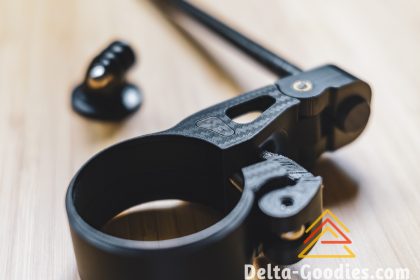
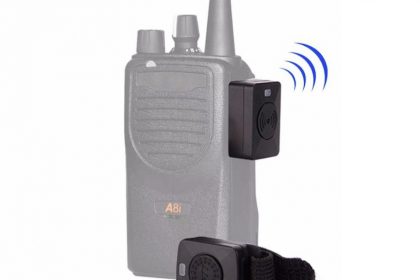
That wish is now reality. The updated radio ships with a Bluetooth PTT with two buttons — each one transmits on its own frequency. Together with the built-in Bluetooth and USB‑C charging, this makes it, in our opinion, one of the most practical radio setups available for hang glider and paraglider pilots today.
What’s new: the dual-frequency PTT
In flight you rarely talk to just one group of people. There’s your flying buddies, your retrieve driver, the launch or tow team, maybe a club or competition channel. Until now that meant either switching channels mid-flight (with gloves, in turbulence, with the radio buried in your harness) or simply not talking to someone who needed to hear you.
With the new PTT:
- Button A sends on your first frequency — e.g. your flying group or buddy channel.
- Button B sends on your second frequency — e.g. your retrieve driver, tow/winch crew, school or safety channel.
No menu diving, no looking down, no hands off the bar or brakes for longer than a thumb press. You decide where your message goes, every single time.
Typical situations where pilots love it:
- Cross-country with a retrieve: chat with your gaggle on one frequency, tell your driver where you landed on the other.
- Tow and winch launching: keep the launch frequency on one button and your buddies on the other.
- Flying schools and tandem operations: instructors can talk to students on one channel and to the landing field or colleagues on the other.
- Competitions and fly-ins: team channel plus organiser or safety channel — both one press away.
Why this radio is different
Plenty of radios can transmit on UHF and VHF. What makes this unit stand out for free-flying is the combination of features built specifically around the way we fly:
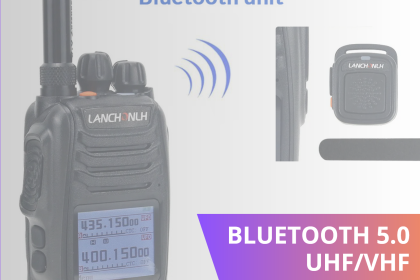
1. Bluetooth 5.0 built right into the radio No external Bluetooth module or dongle. The radio connects to your helmet headset directly and reconnects automatically every time you switch both devices on — you only pair once. The headset volume and microphone sensitivity can be set from the radio menu.
2. USB‑C charging Charge it from the same cable as your phone, vario or power bank — at home, in the car on the way to launch, or at the campsite. No bulky proprietary charging cradle to forget.
3. A battery that lasts the whole flying day — and more The 2,500 mAh lithium battery and the low-power Bluetooth 5.0 chip gave us 10+ hours of talk time and more than 30 hours of standby in our own testing. Long XC days are no problem.
4. Dual-frequency Bluetooth PTT — the new feature described above.
5. Clear sound After our first season with the radio we were honestly surprised how much clearer the transmitted audio was compared with the well-known budget radios. Tip: add a furry microphone windshield to your headset mic and the wind noise drops dramatically. Another tip: use middle range settings for mic and bluetooth sensitivity to avoid too high yield and thus noise to signal ratio. Drop us a line if you need help setting up the radio.
6. Plenty of power and useful extras 10 W output, 128 channels, VOX (hands-free transmission with adjustable sensitivity 1–9), one-key frequency and subtone scanning to quickly match your partner’s settings, and a built-in LED flashlight for packing up after sunset.
Tested by us, not just sold by us
We only offer gear we fly with ourselves. We tested the Bluetooth radio through the entire 2023 season before putting it in the shop, and it has been part of our own setup ever since. The dual-button PTT was the missing piece — and now that it’s here, we wouldn’t go back.
Technical specifications
| Model | HG-UV79UV |
| Output power | 10 W |
| Channels | 128 |
| TX frequencies | 136–174 MHz (VHF, FM) and 400–520 MHz (UHF, FM) |
| RX extra | 350–400 MHz; FM broadcast radio 76–108 MHz; AM airband reception 109–136 MHz |
| Bluetooth | 5.0, low energy, auto-reconnect |
| Battery | 2,500 mAh lithium |
| Charging | USB‑C |
| Talk / standby time | 10+ h / 30+ h (our own testing) |
| Dimensions | 132 × 51 × 34 mm |
| Weight | approx. 256 g |
| Extras | VOX (level 1–9), one-key frequency/subtone scan, LED flashlight |
What’s in the box
- Radio body
- 2,500 mAh battery
- Antenna
- Belt clip
- Bluetooth PTT with two buttons for separate frequencies
- USB power adapter
- USB‑C charging cable
Build your complete cable-free setup
The radio is only half of the story — pair it with a good helmet headset and you’re ready to go:
- Helmet Headset E1+ Bluetooth 5.1 — our recommended headset with high-quality sound.
- VODOOL Wireless Bluetooth Helmet Headset — a proven alternative.
- Fur Microphone Windshield — the cheapest upgrade for clearer transmissions.
- Spare dual-frequency PTT button — as a backup, or to upgrade an HG-UV79UV you already own. A single-button spare PTT for older versions is also available.
Frequently asked questions
Does it work with my existing Bluetooth helmet headset? The radio pairs with most standard Bluetooth helmet headsets. We have tested it with the E1+ and the VODOOL headsets from our shop.
Do I need to pair the headset before every flight? No. You pair once — after that the radio and headset reconnect automatically when you switch them on.
Is there an English guide to the radio’s menus? Yes. There is a detailed, unofficial English guide to the HG-UV79 on GitHub. It explains how to switch the display to English, pair your headset and the remote PTT, save channels, and what every menu item does.
I already own the older version HG-UV79UV which was supplied with a single PTT. Can I use the two-button PTT? Unfortunately, older versions of this radio unit do not work with the new double PTT button. The single button spare PTT are available though.
Can I charge it in the car? Yes. Any USB‑C charger or power bank works — no special charging cradle needed.
Ready to fly without cables?
Two frequencies at your thumb, Bluetooth straight to your helmet, USB‑C charging and a battery that outlasts your longest XC day — for €169.
👉 Get the updated HG-UV79UV Bluetooth radio with dual PTT
Questions? Write to us at team@delta-goodies.com — we fly this setup ourselves and are happy to help you put yours together.
See you in the air! 🪂